An Ordinary Love: Arabesk, Affect, and the Textures of Longing
Christian Liclair
“I never met a leopard print I didn’t like,” declared—allegedly—the former editor in chief at American Vogue and grand dame of sartorial extravagance Diana Vreeland.1
Whether the quote is apocryphal or not, Vreeland’s unabashed adoration of the majestic predator is, nevertheless, well accounted for. In a book collecting his late grandmother’s bons mots, Alexander Vreeland includes a similar line: “The world without a leopard! I mean, who would want to be here?"2
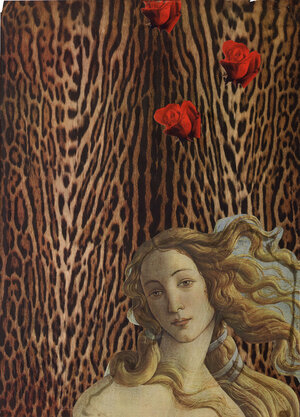
fig. 1 Gülsün Karamustafa, Panther Venus, 1985, Collage on paper, 70 x 50 cm. Salt Research, Gülsün Karamustafa Archive. Courtesy of the artist and BüroSarıgedik
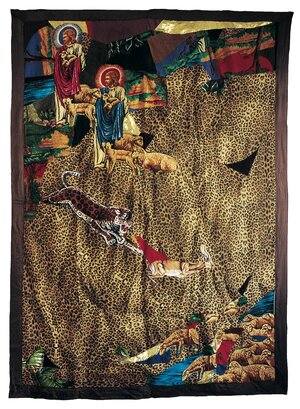
fig. 2 Gülsün Karamustafa, Double Jesus and the Baby Antelope, 1984, textile collage, 185 x 230 cm. Photograph: Barış Özçetin. Courtesy of the artist and BüroSarıgedik
Perhaps not the Turkish artist Gülsün Karamustafa (b. 1946)—for the animal, as well as its feline kin, prowls through much of her collage work from the mid-1980s, such as Panther Venus (1985, fig. 1), where a synthetic, checkered fur pattern constitutes the background to a reproduction of Sandro Botticelli’s Birth of Venus (c. 1485), or Double Jesus and the Baby Antelope (1984, fig. 2), a textile assemblage in which devotional figures of Christ, surrounded by sheep, are set against a backdrop of leopard-print fabrics, across which a leopard pursues its prey.
A leopard print also appears in An Ordinary Love (1985, fig. 3)—acquired by the Austrian Ludwig Foundation in 2021 and on loan to mumok—where the pattern occupies the lower register of a large-scale triptych composed of three textile panels mounted on a rod, a composition that formally recalls the visual rhetoric of Christian altarpieces, thus aligning it with the religious motifs present in Karamustafa’s other contemporaneous works, such as the aforementioned Double Jesus and the Baby Antelope, or Fallen Variation of the Last Supper I and II (both 1984, figs. 4 and 5). Across the base of all three panels of An Ordinary Love, the spotted pattern forms a horizontal mountain-like formation that visually links the separate textile elements. At the center of the middle banner, in front of a shimmering golden background, a human figure unfolds. Made from garments—a blue shirt, a rose-patterned blouse, and olive-green corduroy jeans—it has been partially deconstructed and reassembled into a new form. Creases and folds, especially in the upper section, evoke a sense of voluminous presence, of weight and gesture. The headless figure’s arms are raised—as if caught in mid-motion.
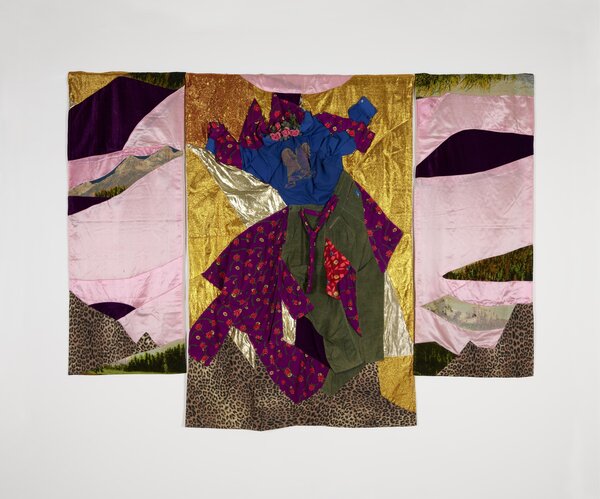
fig. 3 Gülsün Karamustafa, An Ordinary Love, 1985, textile collage, 190 x 245 cm. Photo: mumok Courtesy of the artist and Galerie Krinzinger
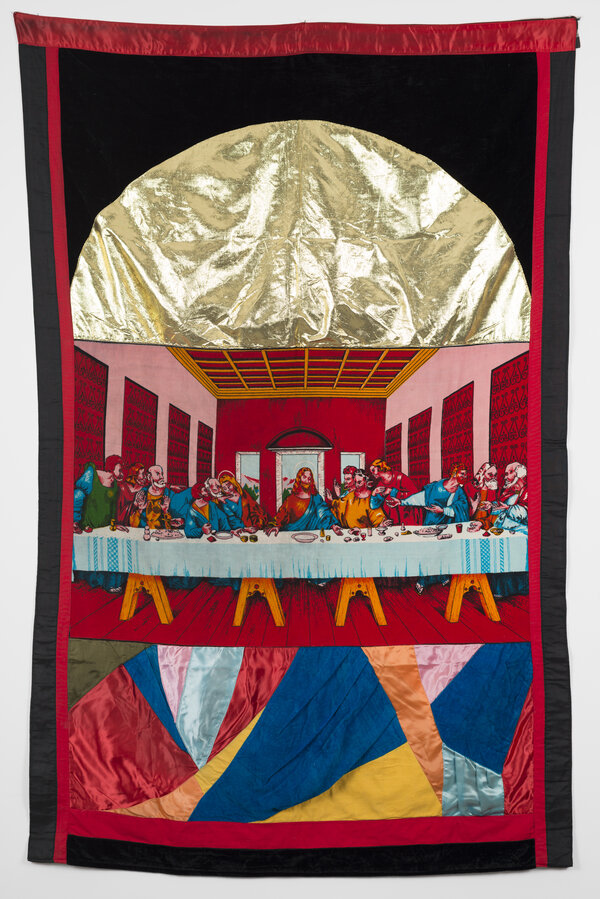
fig. 4 Gülsün Karamustafa, Fallen Variation of the Last Supper I, 1984, textile collage, 190 x 150 cm. Photograph: Barış Özçetin Courtesy of the artist and BüroSarıgedik
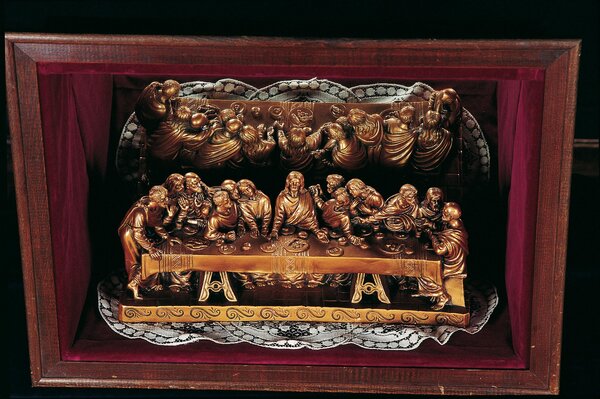
fig. 5 Gülsün Karamustafa, Fallen Variation of the Last Supper II, 1984. mixed media, 40 x 60 x 30 cm Photograph: Barış Özçetin Salt Research, Gülsün Karamustafa Archive Courtesy of the artist and BüroSarıgedik
In an interview for the catalogue accompanying her 2011 exhibition at the ifa Gallery in both Stuttgart and Berlin, Karamustafa remarked that she had long been fascinated by leopard patterns, wondering why such motifs recur so insistently in fashion. Reflecting on her works from the 1980s, the artist explained that she employed this fabric because it seemed to crystallize a growing desire for kitsch formed under the social and economic conditions of a decade marked by rapid rural-to-urban migration in Turkey—especially from the mountainous, economically underdeveloped southeast.3
Yet before its association with kitsch, the leopard motif carried a markedly variable—and historically unstable—symbolic charge. Never confined to a single register of meaning, the pattern has moved across geographies, periods, social strata, and cultural contexts, eventually circulating, in the twentieth century, between haute couture, popular fashion, and underground style, as well as between masculine and feminine codes. For instance, in the early 1960s, Jacqueline Kennedy’s leopard-skin coat—made of real fur—signaled elite status and provoked criticism for her ostentatious, almost regal display of wealth and power. A decade later, the leopard had, as a fabric pattern, been embraced by underground and punk figures such as Debbie Harry and Sid Vicious and was paraded by drag icon Divine in John Waters’s cult classic film Female Trouble (1974).4
In her book Fierce: The History of Leopard Print, burlesque artist Jo Weldon pointedly characterizes the motif as “a pattern that helps animals blend in and humans stand out.”5 Tracing the cultural fascination with feline predators and their appearance across time, she highlights an early and emblematic association between female power and big cats: The so-called Seated Woman of Çatalhöyük (c. 6000 BCE), a baked-clay female figurine flanked by two leopard-like animals, is often interpreted as a symbol of fertility or authority. Çatalhöyük, located in present-day Turkey and first inhabited between roughly 7400 and 6200 BCE, is among the world’s oldest-known urban settlements. Archaeological research suggests that the Anatolian leopard (Panthera pardus tulliana), a subspecies native to Central Anatolia and the Taurus Mountains, inhabited the region until relatively recent times.6 As archaeologist Ali Umut Türkcan has shown, leopards occupied a prominent place in the visual culture of Neolithic Anatolia—but this portrayal was less often a representation of their living existence than of their skin: spotted pelts with tails are frequently depicted draped over human figures in wall reliefs and sculptures.7 Given the scarcity of leopard bones in the faunal record, Türkcan argues that such skins were unlikely to have served as everyday clothing: Rather, their visual prominence suggests use in ritualized or symbolic contexts. This already anticipates later associations of clothing made from feline fur with power: In Homer’s Iliad (c. 750–700 BCE), the hero Menelaus wraps a spotted leopard skin over his shoulders; a Roman statue from the second century CE of Dionysus portrays the god cloaked in leopard skin; and in ancient Egypt, kings and priests wore leopard pelts to signify divine authority. But even today, when the pattern is ostensibly democratized through its mass-market availability, it remains a site of distinction—where material, fabric quality, branding, and context of use subtly reinscribe hierarchies of class, taste, and aspiration.
Arabesk as a Class-Based Affect
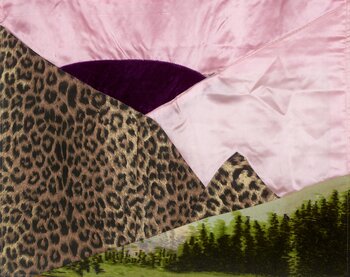
fig. 6 Gülsün Karamustafa, Detail of An Ordinary Love, 1985, textile collage, 190 x 245 cm. Photo: mumok. Courtesy of the artist and Galerie Krinzinger
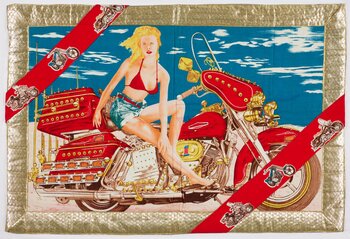
fig. 7 Gülsün Karamustafa, Motorcycle, 1986, textile collage, 77 x 115 cm. Photo: mumok. Courtesy of the artist and Galerie Krinzinger
From the leopard-patterned mountainous ground, Karamustafa’s figure appears to rise upward toward a curved form that crowns the middle panel like a rosy, shimmering sun—seemingly reemerging from vintage pieces of clothing like a phoenix, the mythical bird, an association reinforced by the eagle-like creature printed on the blue blouse at the figure’s upper body. To either side, the figure is flanked by formations that evoke mountainous landscapes (perhaps alluding to the above-mentioned Taurus Mountains—the native habitat of the Anatolian leopard and a rural region from which many migrants, predominantly Kurdish, set out for Istanbul in the 1980s). This association with a mountainscape is reinforced by the tapestry-like surfaces integrated into the left panel, where a depiction of mountain ranges corresponds visually with the wooded terrain shown in the panel’s lower right (fig. 6). These elements are, like the surrounding areas, textile—cut from mass-produced wall hangings made of synthetic, towel-like fabric, a form of affordable décor commonly found in the homes of Istanbul’s working-class migrant families. Karamustafa began collecting such hangings while researching the integration processes in Turkey for Atıf Yılmaz’s film A Sip of Love (1984), for which she served as artistic director—during a period when she herself was effectively confined to Turkey after her passport was revoked following her 1971 arrest for aiding political dissidents. In preparation for the film, which follows a woman’s pursuit of economic independence after her husband loses his job and she takes up factory work to support their family, Karamustafa spent extended time in the houses of rural-to-urban migrants, who gifted her wall hangings and some of their own garments, which were later used both in the film and in her subsequent artworks.8 Notably, in the film’s opening credits, various wall hangings—gaudily colorful textiles depicting religious scenes, eroticized figures, nature and hunting scenes, or pop-cultural icons like Elvis or Jesus—serve as the background imagery. Some of these appear to be the very same wall hangings later used by Karamustafa in her own work—such as the mountainous landscape motif in An Ordinary Love or the hunting scene found in Double Jesus and the Antelope. Others were similarly recycled in Karamustafa’s textile works, though they retain their formal integrity as wall hangings even as they are elevated into discrete aesthetic objects—often through the addition of gold-colored framing. Motorcycle (1986), also in the mumok collection on loan from the Austrian Ludwig Foundation, exemplifies this logic: A mass-produced pin-up wall hanging, featuring a bikini-clad blonde draped across a gleaming red cruiser beneath a saturated blue sky, is bordered with crinkled gold lamé and diagonally banded by two red sash-like strips printed with miniature motorcycles (fig. 7).
The work unabashedly draws on fantasies of sex, speed, and spectacle, shaped by clichés of male desire and aspirational consumer culture, yet does so in a visual register marked by presumed working-class aesthetics—foregrounding a language of conspicuous display and tacky allure. The imitation-gold frame amplifies this pretentious flashiness, encapsulating a key hallmark of kitsch—which, as Karamustafa insinuated in the previously cited interview, served as an external label for working-class style that did not reflect actual wealth or glamour but their glitzy simulation. As a concept, kitsch has long connoted emotionally charged, easily legible forms that operate affectively and without distance—often dismissed precisely for their mass appeal and perceived lack of refinement. This texture of affect and affiliation—immediacy, legibility, and class-based dismissal—finds a culturally specific echo in the notion of arabesk: a hybrid, often disparaged aesthetic associated with Turkey’s internal migrants and emergent urban poor. Initially coined in the 1960s to describe a hybrid musical genre shaped by rural migrants navigating the upheavals of urbanization and modernization, the style was quickly dismissed as degraded for its fusion of Turkish classical and folk traditions with Egyptian and Western influences. Similar to kitsch, it was understood to offer immediate, affectively charged pleasures, legible without the cultural capital that underwrites bourgeois distinctions of “good” taste. Yet the term arabesk soon came to signify a broader migrant culture forming on the urban peripheries of Istanbul and would name an entire affective and aesthetic register associated with rural-to-urban migration, marginality, and collective feelings of loss, longing, and fatalism. At its peak in the 1970s, arabesk music articulated, as Meral Özbek puts it, the “ambivalent structure of feeling” produced by displacement:9 Its lyrics staged romantic suffering as a metaphor for social alienation, precarious labor, and unfulfilled aspirations. Or, as music ethnographer Martin Stokes notes, “arabesk without pain would simply cease to be arabesk.”10
Stigmatized by cultural and political elites alike, arabesk culture came to embody the “urban other.”11 Its affective intensity is, as Ralph J. Poole summarizes, inextricably linked to the feminine, to bodily pleasures, and thus devalued in gendered terms;12 “passive,” “depressed,” and “yelling” were some of the adjectives used to deride its emotional style.13 Leftist intellectuals and urban bohemians dismissed arabesk as regressive—a genre that failed to embody values of Western modernity and that fostered fatalism and manipulated consciousness rather than enabling political critique. By contrast, classical and folk musicians condemned arabesk for diluting “pure” musical traditions with both Arab and Western influences. Furthermore, following the 1980 military coup—which overthrew Turkey’s democratically elected government amid growing political unrest—the regime under General Kenan Evren even cast arabesk culture as a threat to national cohesion as well as moral discipline, and the state broadcaster TRT banned arabeskmusic from television and radio. Around the same time, a 1981 law barred individuals deemed to be “men dressed as women” from appearing on stage or screen14—a regulation that directly targeted trans women performers and led to the banning of popular artists such as Bülent Ersoy, Serbülent Sultan, and Tijen Erman. Ersoy, who had undergone gender reassignment surgery in London in order to be legally recognized as a woman, became the most visible case.15
Ersoy’s unlikely celebrity status was no outlier within the field of arabesk music. Although not out, another arabesk singer of the time, Zeki Müren, one of Turkey’s most beloved performers, had long cultivated a flamboyant stage persona that defied prevailing codes of masculinity—appearing in sequins, ostrich feathers, mini-shorts, and heavy makeup. Yet even male arabesk performers who sported conventionally masculine styles—slicked-back hair, dark sunglasses, leather jackets—complicated this toughness with anguished expressions and performances of vulnerability. Prominent arabesk singers such as Orhan Gencebay, Müslüm Gürses, and Ferdi Tayfur infused their lyrics with romantic suffering, loneliness, and existential despair, subtly contradicting dominant ideals of masculinity by making pain, sentimentality, and longing central to their public personas.
These emotionally expressive masculinities—whether flamboyant or rugged—continued to unsettle dominant cultural ideals in the early 1980s, even as the military regime sought to suppress arabesk as a destabilizing force. Yet the state’s antagonism would soon give way to a selective embrace: With the election of Turgut Özal in 1983 and the rise of his neoliberal Motherland Party, the government eventually espoused certain forms of arabesk as a populist tool to win a significant voting block. Yet this incorporation remained limited, as the state continued to regulate which versions were deemed culturally and morally acceptable. But even when performers adhered to conventional displays of masculinity—drinking rituals, cigarette smoke, mustachioed singers—the emotional vulnerability of arabesk, Özbek writes, “positioned these men alongside other excluded people and seemed to admit, in effect, a crossing of the boundaries of gender and an acceptance of the permeability of identities.”16
As the term arabesk gained cultural traction, however, it was no longer confined to music: It became a wider label—used, often dismissively, to mark perceived class-based aesthetics in clothing, décor, and sentimentality associated with migrant life on the urban periphery. If arabesk was condemned for its emotional immediacy and refusal of cultivated distance, then its provocation was never merely affective. It unsettled aesthetic hierarchies, slipping between registers and troubling distinctions between the refined and the vulgar. Migrants were mocked not only for their perceived kitsch style—gaudy colors, heavy fabrics—but also for flaunting Western consumer goods such as cars or clothing brands without possessing the corresponding cultural capital. Karamustafa’s textile works render this aesthetic permeability palpable in the very surfaces she mobilizes, where the sentimental and the erotic, the devotional and the decorative, are stitched together.
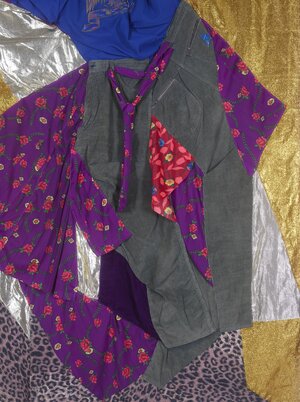
fig. 8 Gülsün Karamustafa, Detail of An Ordinary Love, 1985, textile collage, 190 x 245 cm. Photo: mumok. Courtesy of the artist and Galerie Krinzinger
An Ordinary Love is no exception, as it puts sartorial signifiers of class as well as gender into play. A long necktie, looped through trouser belt loops and dangling downward, functions as a displaced emblem of modern masculinity—specifically, the disciplined, respectable masculinity that arabesk culture, whether due to its emotional vulnerability or its excessive, body-centered performance of working-class manhood, was often positioned against in dominant accounts (fig. 8). The tie, by contrast, connotes a different masculine ideal: one associated with white-collar rather than blue-collar labor, despite the accessory’s origins in military dress adopted from Croatian mercenaries at the French court.17 Yet blue-collar labor is present as well, evoked by the corduroy trousers—a fabric historically worn by manual laborers because of its durability. In An Ordinary Love, these contrasting codes converge awkwardly: The tie is not worn where it “belongs” but is re-sited near the zipper of said trousers, like a conspicuous phallic joke—not a literal substitute for a penis, but a parody of what the tie already implies.
This sartorial misplacement might, at first glance, seem to reinforce classist stereotypes: a failed attempt to perform modern masculinity correctly. But read differently, the displacement performs a subtle détournement—it loosens the sign of masculine respectability from its proper place, undermines its authority, and recodes it through irony and exaggeration. Rather than aspiring to the norms of bourgeois masculinity, the figure in An Ordinary Love exposes both the fragility of these norms and the way clothing continually reinforces gender and class distinctions. This tension gains further weight in the context of 1980s Turkey, where, as we have seen, certain clothing signs became an object of state scrutiny under military leadership, and public appearance was treated as a matter of social discipline. While sumptuary laws have existed for centuries across cultures—typically policing distinctions of rank and privilege through dress—regulations or social pressures after industrialization have often shifted their emphasis away from class difference and toward the policing of gendered norms of visibility and propriety.18 Clothes are never “just” decorative or functional. They encode affiliations, aspirations, and hierarchies.
Textiles in Motion
The textiles in An Ordinary Love are, however, not merely symbolic; they are materialized as objects—materials with histories of labor, trade, and movement, shaped by infrastructures of production and economic transformation. Constructed from actual garments and fabrics, Karamustafa’s figure insists on this materiality and its historicity. Scholars such as Burcu Doğramacı and Elke Gaugele have long emphasized fashion’s entanglement with modernization and transcultural exchange, showing how garments, patterns, and styles are shaped by diaspora, displacement, and the migration of forms.19 In this sense, the fabrics in An Ordinary Love are not simply codes to be deciphered but materials embedded in political and economic conditions—an especially resonant point in light of Turkey’s textile economy and its long-standing entanglement with global trade. Since antiquity, the Anatolian region has been central to transcontinental textile exchange, from Silk Road networks to Ottoman caravan routes. Cities such as Bursa and Constantinople (now Istanbul) served as key terminals where fabrics and motifs from Persia, Central Asia, and India entered Mediterranean markets.20 During the Ottoman period, this infrastructure expanded through caravanserais, ports, and trading centers such as Constantinople’s Grand Bazaar, established in the fifteenth century, where Ottoman silks and carpets circulated alongside imported materials from both East and West. This vast infrastructure of textile exchange was dramatically restructured in the 1980s, when Turkey’s shift toward neoliberal economic policy repositioned the garment industry as a key engine of export and urban labor.
It is perhaps in this sense that Marion von Osten, writing in the catalogue for Karamustafa’s 2016 retrospective at Hamburger Bahnhof in Berlin, describes An Ordinary Love as containing “hidden stories” of multiple migrations: “These can be tales of migrations from the country to the city or across national borders, or of the actual things that travelled with the migrants and subsequently shaped parts of public life: entire production branches as well as mundane and consumer aesthetics.”21 The work does not depict migration thematically or narratively; rather, it registers migration materially, through the very textures and surfaces that compose the figure. Fashion here becomes a medium of social transformation: a record of shifting labor conditions, new markets, and emerging commodities, but also of the desires, constraints, and aspirations that reshaped Istanbul’s urban fabric. In this context, clothing participates in practices of self-fashioning that were increasingly facilitated by a growing consumer culture—offering ways of negotiating, expressing, or refiguring cultural norms within everyday life.
At the same time, Karamustafa’s use of mass-produced materials has never been easy to classify within the paradigms of contemporary art. Coming full circle, Ceren Özpınar has shown how critics since the 1970s—when Karamustafa began her professional career after graduating from the Istanbul State Academy of Fine Arts in 1969—often dismissed her work by relegating it to the genres of arabesk or kitsch.22 As the performance artist Şükran Moral put it in 1986, it remains unclear whether Karamustafa seeks to critique kitsch objects or simply wants to display them.23 But AnOrdinary Love does, in my view, not set out to resolve this ambiguity—an ambiguity that is already woven into the work’s title, which juxtaposes two seemingly opposing terms. In dominant narratives, love is often cast as the very opposite of the ordinary, idealized as an affective exception, a moment of rupture from daily routine. In this sense, the work stages a tension between the everyday and the extraordinary, between materials of mass culture and their elevation into a unique piece of art.

fig. 9 Gülsün Karamustafa, The City and the Secret Panther Fashion, 2007, Single channel video, sound, 13:07 min. Courtesy of the artist and Galerie Krinzinger
But the title might also gesture toward the ambivalent position of fashion between homogenization and individuation—between the promise of uniqueness that lends life its appeal, and the ordinary, where style becomes subject to normative fashions. This tension also animates Karamustafa’s single-channel video The City and the Secret Panther Fashion (2007), which follows a group of five women into an apartment covered floor-to-ceiling in leopard-print textiles (fig. 9). There, they try on matching animal-print dresses, drink coffee, gossip, and laugh. Reflecting on the film, Karamustafa describes the depicted interior as a temporary escape: a fictive residence entered with a secret code, where the women can experience “the joy of wearing something in total contrast to their daily attire.”24 For a brief moment, she notes, “the animal skin patterns free these women from normal concerns and conflicts until they return to their colourless atmosphere once again.”25 Von Osten interprets this telenovela-inflected film as a scene of self-empowerment, where consumer behavior loosens the grip of prescribed femininity, stating that “When Karamustafa highlights existing mundane and consumer practices, which apparently can be attributed to cheaper taste, she does so not with the aim of provoking a distanced smirk in view of kitsch, but to confront us in a humorous manner with the resistance of the material against the conception of a globally standardized society.”26
An Ordinary Love does not redeem the ordinary by transcending it, nor does it idealize love as an escape from it. Instead, it holds the ordinary open as a contested field: where class-based aesthetics and gendered codes are negotiated, where fantasies of elsewhere are staged in synthetic prints and pre-worn garments, and where the desires projected onto fabric—its textures, histories, and styles—persist not despite social constraint but within it. Love, here, is neither pure feeling nor private refuge. It is a practice of attachment embedded in the material world—through what people wear, collect, reuse, and long for, and through the fragile, excessive, and sometimes ridiculed fashions those longings may take.
Copyediting and proofreading: Erin Troseth
Gülsün Karamustafa’s "An Ordinary Love" (1985), "Motorcycle" (1986) and "The City and the Secret Panther Fashion" (2007) were acquired by the Austrian Ludwig Foundation in 2021 and are on permanent loan to mumok.